Posts in Dentistry
The Mysterious Tooth Fairy

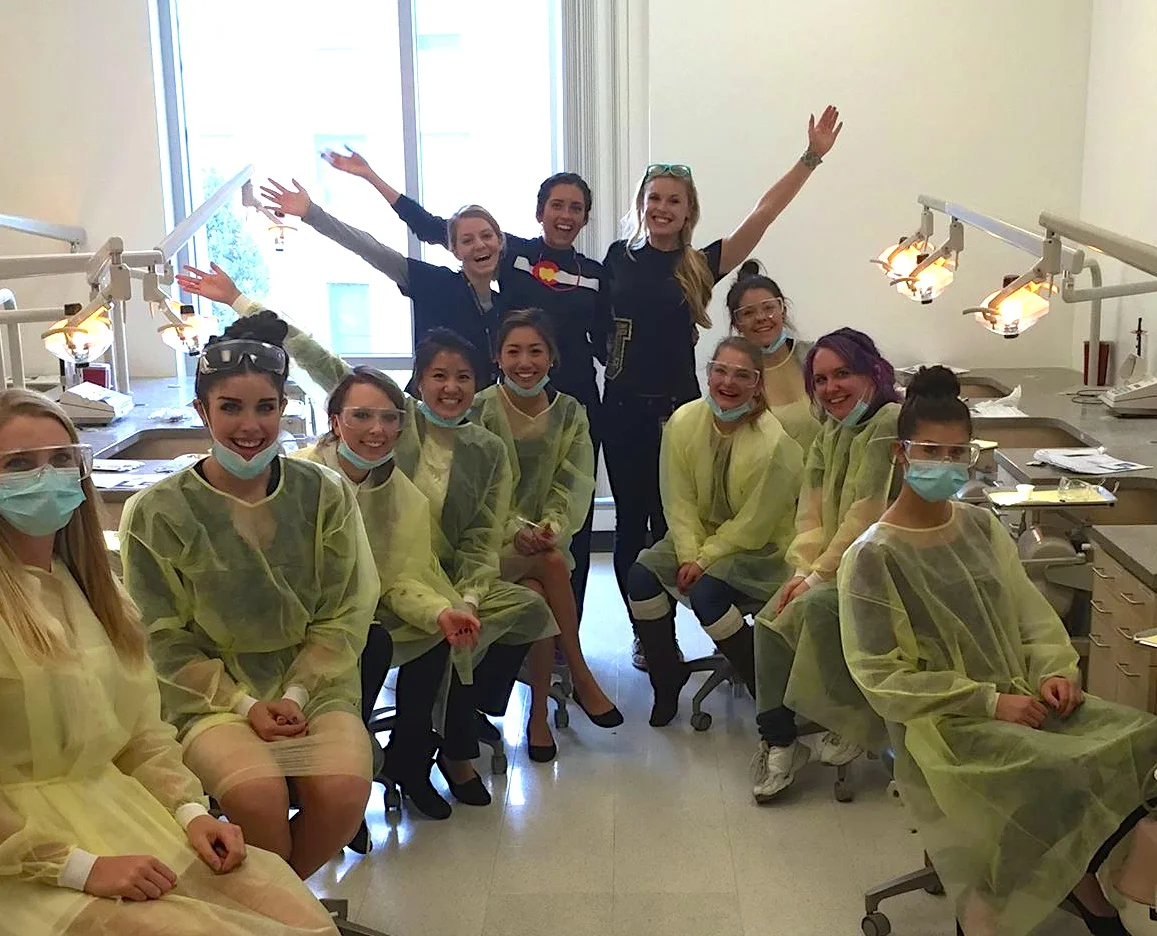
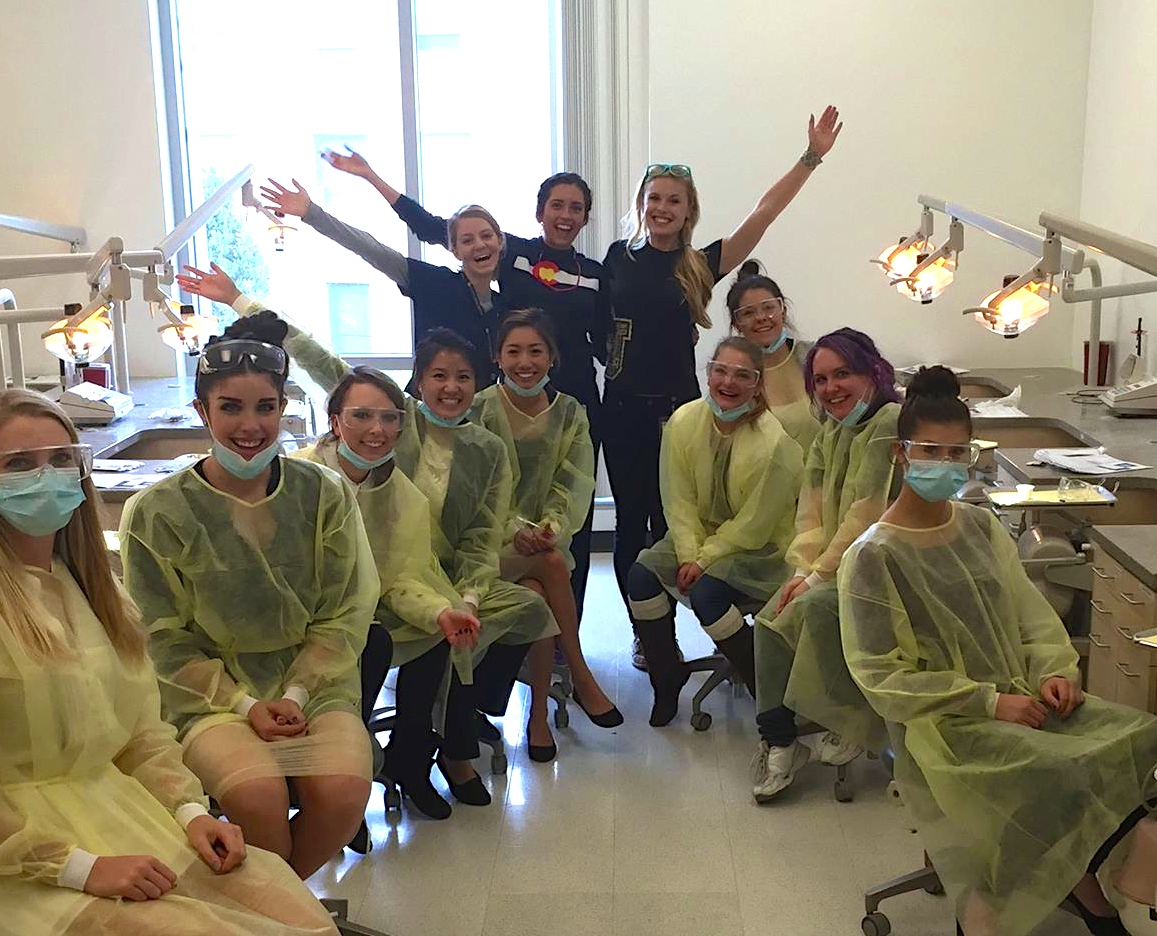
  52673217As a child, I had no illusion that Santa Claus or the Easter Bunny were real.  The tooth fairy, on the other hand, was a fantasy figure I never doubted.  The idea that someone wanted my baby teeth and would even pay for them thrilled me!  As a dental student now, I got the opportunity to be the tooth fairy on our rotation at Children’s Hospital Healthy Smiles Clinic.  It was interesting to see which kids believed in her and how much money they’d expect to receive.  The answers varied from child to child and their excitement for her visit did as well.


The tradition of rewards for baby teeth is believed to have originated in Europe during the Middle Ages.   Exfoliated baby teeth were buried, and when the child’s sixth tooth fell out, the parents would slip a gift or money from the tooth fairy.  In northern Europe, a tooth fee was paid when a child lost their first tooth. In England, children were often instructed to burn their baby teeth in order to save themselves from hardship in the Afterlife.  Finally, the Norse culture believed that children’s teeth brought good luck in battle.

The representation of the tooth fairy we know today didn’t develop until much later.   The earliest reference to the tooth fairy in modern times was in the Chicago Daily Tribune in 1908.  The Tribune suggested that many stubborn children may allow a loose tooth to be removed if they know about the tooth fairy.  In addition, mothers should visit the 5-cent counter at the local department store and leave those small gifts under their children’s pillows.  However, the idea of the Tooth Fairy herself didn’t become popular until the 1930’s.


The rewards left under a child’s pillow vary by country, their family’s economic status, and what the child’s peers receive.  The national average per tooth in 2013 was $3.70, according to a survey by Visa Inc.  Some parents tend to offer more money for larger teeth or the first and last tooth.  Dentists often tell children that the cleaner and healthier a tooth is, the bigger the reward.

Unlike Santa Claus or the Easter Bunny, the Tooth Fairy does not have a set appearance.  In popular culture, the Tooth Fairy takes on many different forms, from The Rock in “The Tooth Fairy” to “Rise of The Guardians.”   In addition, a 1984 study by Rosemary Wells claimed that only 74% of children believed the Tooth Fairy to be female.  Some children believed that the Tooth Fairy wasn’t a fairy at all but an animal such as a mouse or bird.  Which begs the question; what do you think the tooth fairy looks like?

The Tooth Fairy’s appearance, how much she pays, or even which teeth she prefers we might never know.  By becoming a dentist, I will be that much closer to finding out, and if you ask me, I think she looks just like me and prefers teeth with no cavities.


Networking is Not a Dirty Word

Networking PicAt some point, you might have heard the saying, “It’s not who you know, but what you know.”  This advice typically refers to networking with others in an effort to learn from professionals in your industry, exchange useful ideas, and perhaps find your dream job.  

Meeting new people is not only advantageous from a career standpoint; these new relationships may evolve into valuable, lasting friendships that enrich your life professionally and personally.  You might even lock eyes from across the room with a dashing young man (or woman) at a professional function and end up marrying them (well that happened to me, at least).


Despite the positive effects of networking, many people are apprehensive to do so.  Admittedly, the word “networking” may be a turnoff; it sparks various negative connotations of forced, awkward interactions at scheduled happy hours or meet & greets.  Instead of thinking about networking from this perspective, I suggest disposing of that notion altogether and focusing on making new lifelong relationships with people. Below are some tips to keep in mind to start forming meaningful and genuine connections with dentists, fellow students, and other professionals.


  1. Start with the right mindset


To successfully form professional relationships with people, you must be in the right mindset and have the right intentions.   Be sincere with your interactions and get to know people, listening to their stories. I have witnessed too many people networking with the blatant intention of getting a “dream job” or some other self-serving purpose.  This superficial mindset is obvious to most people and is a huge turnoff. Instead, get to know other people for the sake of getting to know them.  This alone is worth the effort of networking.  If other professional opportunities arise from knowing these new people, then that is just icing on the cake!


  1. Put yourself out there


In order to get to know people, especially in a significant way, you must break outside your comfort zone.  This means occasionally foregoing your normal routine to go to events where you might connect with new people.


Situations that might be conducive to meeting new people include organized dentistry events (e.g. CDA, MDDS, dental fraternity study clubs/networking events, etc.) or even striking up a conversation with an interesting guest speaker for a class.  Personally, I have made some great professional and personal connections at college alumni events, social gatherings, and even coffee shops.


Also, keep in mind that some of the best connections you may make are non-dentists!


  1. Keep in Touch


After meeting new people, always keep in touch.  The method of keeping in touch depends on the person, their age, and their position.  For some people, a LinkedIn request may be enough.  However, to form a significant relationship with someone, as with any relationship, both parties must work to maintain the relationship.  This includes periodic emails, phone calls, or even coffee dates.  Just like anything in life, you will get more meaning out of any situation if you put a more sincere and genuine effort into it.


Again, this goes into changing your mindset about networking—you must truly appreciate the value of forming new, meaningful relationships for professional and personal reasons.  Then, you must develop the discipline and willingness to incorporate meeting new people and keeping in consistent contact with them throughout your career.


  1. Pay it Forward


If you choose to embrace the concept of networking and putting yourself out there, never do it for selfish reasons.  The whole point of making a new connection is to develop a reciprocal, fulfilling relationship with another human being.  This is always true for any type of relationship.  With that said, always do your best to also help others along their professional and personal journey, and your efforts will surely be reciprocated in some way.


As you go through life, virtually every encounter you have is “networking”; try to keep an open mind with every encounter—you never know how it can enhance your life and how you may enhance the lives of others.


The Great Dental Therapist Debate
LO-RES-teeth-dentist-97105645.jpg

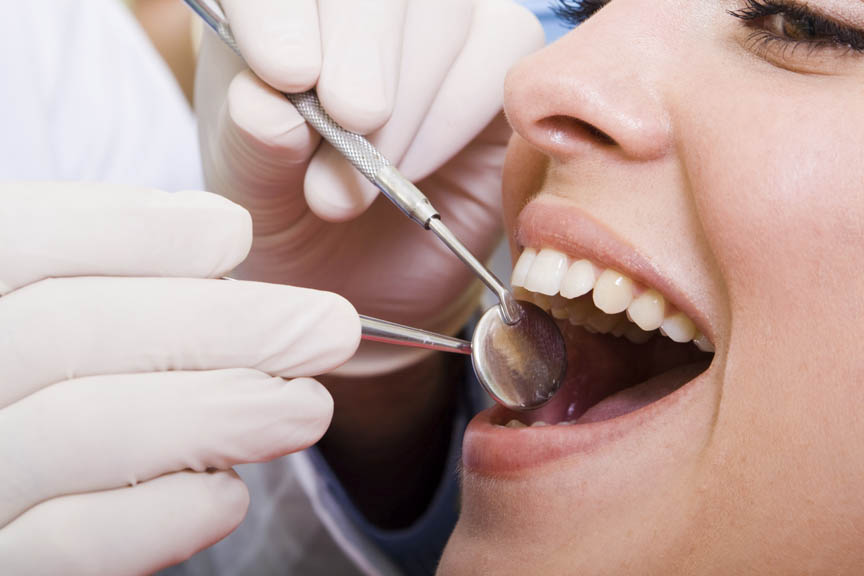
LO-RES-teeth-dentist-97105645 Like many other dental students, I’m from a state that doesn’t have its own dental school. Unfortunately, this leads to a very high lack of access to care for the residents of my home state, New Mexico. When speaking to several members of the NMDA about issues that are impacting our state, the words “mid level care providers” and “dental therapists” inevitably pop up. My basic assumption of these words (which are one in the same) at the time was “a non-dentist” that can perform “dentist” duties. Those are scary words to hear as a dental student, investing hundreds of thousands of dollars and four years of my life, only to have the same job done by somebody who has only received a bachelor’s degree. I decided to dive a little further into the subject about the pros, cons, regulations, and education requirements surrounding the dental therapist…so here we go!


The Basics….  

  • Dental therapists operate under a dentist’s license in an office or satellite clinics. Their basic duties vary depending on each state’s rules.
    • Scope of practice includes fillings, seating crowns, performing extractions, adjusting dentures, diagnosing radiographs, making treatment plans
  • Dental therapists are currently practicing in Minnesota, Maine, and Alaska. There are different names for the profession popping up in legislature all over the country (including Colorado)
  • Two types:
    • Dental therapist-
      • Requires a bachelors’ degree in Dental Therapy with several licensure and competency exams in order to practice. May perform some services under “indirect supervision,” which means a dentist must be on-site to authorizes procedures, or under “general supervision,” which means the dentist is off-site and must still authorize procedures.
    • Advanced dental therapist-
      • Dental therapy degree along with a masters’ degree in Advanced Dental Therapy which requires 2,000 hours of clinical practice and a certification exam. They may do all that a dental therapist can do, and also perform oral evaluations, treatment plans, and non-surgical extractions of teeth.
      • Practices under the supervision of a dentist, but all procedures can be completed under “general supervision.”


The Case FOR Dental Therapists…

  • Contrary to what many believe, there isn’t a lack of dentists in certain “at need” states, rather a lack of distribution. This can be alleviated by dental therapists working at satellite clinics in rural areas addressing basic needs of the community without patients being forced to travel to far-away dental offices.
  • They only perform routine care, so it opens up the dentist’s schedule to perform more complex care like endodontics, prosthodontics, and implantology, while still addressing basic needs of the office’s patient pool. This is viewed as a way to expand a dentist’s practice and maximize profit.


The Case AGAINST Dental Therapists…  

  • It is a common opinion within the dental community that if Medicaid and insurance reimbursements didn’t drive practitioners to lose money on certain procedures, many more would practice in areas where fee-for-service dentistry isn’t the norm. Many dentists believe that more changes to Medicaid and insurance reimbursements need to be made in order to drive practitioners to “low income” areas.
  • States should address access to care issues by reimbursing dentists who work in rural areas. Dental therapists have the ability to work on simple cases, but comprehensive care is the only way to effectively provide dentistry that is at the standard of care.
  • The ADA believes that the “one-size-fits-all” model provided by dental therapists is not the best way to reach populations that live in rural communities.
  • Dentists do not want their profession’s quality to be in jeopardy with the addition of therapists who are less educated in dentistry.


In the end, it is up to YOU as a dental professional to decide what is best for you, and most importantly, the patients in your home state. Being involved in your local ASDA and ADA chapter will make a difference whether dental therapists become a reality where you live.

Military Dentistry: the lowdown

IMG_0696 - AFA dental visit I grew up being interested in serving my country because both of my grandfathers had done so.  My only dilemma was how I could accomplish that. While applying to dental school, I realized that I could be a dentist, serve my country, and have my schooling paid for. All of my ducks were nicely lined up and I began my journey to become a dentist. Now let’s dive deeper into my decision to serve.


My life in dental school is much easier thanks to my military commitment. The full ride scholarship is welcomed, especially during a time when dental schools are charging 4 year tuitions that equate to a full mortgage. You graduate with a foundation but no house to show for it. My fellow militia and I also receive a monthly living allowance that can be fairly generous if you live within normal means. Oh, and cross your T’s and dot your I’s at the right time and you may qualify for a large signing bonus!


I know what you are thinking, “With all of these benefits, there must be a catch, right?”. Well yes there is…kind of. A military lifestyle is not for everyone. A 4-year scholarship requires a 4 year pay pack while living in about 2-3 different locations. As an officer, it is expected that you will move about every 2 years, and you might not have much say in where you will be going next. This nomadic lifestyle can be stressful on a family, and difficult for a spouse with their own career. If you do not like taking orders, clearly, the military is not for you. Many people choose dentistry for the autonomy. Autonomy does not mix with the military for obvious reasons.


Besides financial benefits, there are many other great reasons to choose the military route. Every day you are serving individuals who are sacrificing their lives for this country. This is an intangible gratification. You can travel and have the opportunity to live almost anywhere in the world. You have 4 years to focus on improving your dental skills. Another overseen aspect is that your patients are not limited by finances and are able to receive the best possible care. This will not apply to the civilian side, but will allow dentists to hone many new skills.


Now lets do some rough math. Out-of-state tuition is roughly $75k a year, roughly $300k at the end plus about $50k in interest at an average rate of 7%. For the military, you can add on an income of $25k a year while in dental school. That is a total scholarship value of $450k. Now the field evens out because the military salary will range from $80-95k. As compared to the average new dentist making $90-130k a year minus debt payments. I did a full break down but I will spare you the minutia. After paying off some of the debt, both parties make out pretty even after 4 years post graduation.


I view my scholarship as a tool to advance my career. I know that it will be hard on my future family and moving around will be cumbersome. There will be days when I envy my civilian counterparts as I float along on a ship in the middle of the ocean. There will be plenty of hardships and unfortunate circumstances. I like to live life with an open mind. I know that this experience will help my career and my family to grow. I will gain experience working with specialists of all kinds and have unique experiences that only a military dentist can have (helicopter rides, aircraft carriers, etc.)


I was given some advice years ago, “Do not choose the military scholarship for the money. Choose to serve your country and the finances are a perk.” I think this sums things up nicely. The money looks really nice in order to avoid the student loan debt, but there are many costs of every day life as a military dentist. I like to put it this way: You have to pay someone either way, it just depends on how you want to pay it. The traditional student is paying monetary debt. The military student is paying with their time. If you want to serve your country and do dentistry, the scholarship is a good choice for you.

Baby Dentists

12119502_10207403679632335_268881570_o Sometimes it’s hard to imagine the days before dental school- before the navy blue scrubs, the “conscious incompetence”, the juggling of patients and their demands [“I can only come every other Tuesday… and only in the mornings… oh, and can I come at 9:45 instead of 9?”].


In this sort of tunnel vision, I forget the days when I wanted nothing more than to know the direction my future was headed in Operation: Getting Into Dental School. Where would I live for the next four years? What would I do if I didn’t get in? What the HECK am I doing?


Untangling the confusing web of dental school requirements: prerequisite classes, letters of recommendation, writing a personal statement, studying for the DAT, interviewing…is enough to make my head spin, even to this day.


Although I didn’t decide I wanted to go to dental school until the semester before I graduated from college, the few resources that I took advantage of through my pre-health advisor and club were invaluable. I still have a copy of my mock interview on a DVD tucked away in a drawer in my desk [I’m not sure why I haven’t thoroughly disposed of it-few things are worse than watching yourself on camera].


Somehow I managed to finagle my way into a couple of dental school acceptances, and here I am today, three years later. During my first year, I began volunteering at the ASDA Pre-Dental Committee events and absolutely fell in love. There is no better motivation than to be surrounded by groups of eager pre-dental students dying to be in your shoes, picking your brain, and looking up to you as the All Knowing dental student. For the next two years I filled the role as the ASDA Pre-Dental Chair and continued planning events- wax nights, mock interviews, personal statement reviews, simulation clinic activities…anything and everything that could help these “baby dentists” grow and flourish in their quest to dental school admittance.


Seeing familiar faces in the incoming classes, getting email updates “I got in to dental school!!”, and following the paths of students that I have met during my own “Pre-dental” journey in dental school has been one of the most rewarding.


Bottom line:  You never know who you can inspire. Or who can inspire you.


The Syrian Crisis and Dentistry

SyriaGetting concrete information on world affairs can often feel like trying to build a restoration out of Jello. It seems no matter where you look, news is inherently biased and trying to push one political agenda or another. Factual reporting seems to have evaporated like acrylic monomer beneath the sun. So it is with some trepidation that I set out to write about the Syrian refugee crisis. In case you’ve been living under a rock for the better part of the decade, there has been a fair amount of strife in Syria. And that, ladies and gentlemen, is how you write an understatement. There are at least three factions—and really more like five or six—vying for control of a country 25% smaller than Colorado. Imagine, if you will, living in a place where instead of hearing honking horns, gunfire is more the norm. A place where you must live in constant fear of bombings—both from the sky and from the ground. A place where, at any given moment, your life could end. Try to imagine what you would do in such a place.

I recently met a patient in screening. He told me his teeth hurt, which is not uncommon in that clinic. We chatted for a while about how the school works and what he could expect from his time with us. I did notice he wasn’t opening his mouth much to talk. While playing the waiting-for-faculty game, we made small talk. Food came up, and I mentioned I like middle-eastern cuisine. He told me he was from Syria, and he suggested I try the restaurant at which he works. I thought nothing of it.

Then I looked in his mouth.

His teeth—all 28 of them—were ground down to below the CEJ. His mouth looked like someone had taken a handpiece and leveled every tooth to an almost-perfect flat plane. I had to resist the urge to gasp. I asked him about his habits, trying to determine an etiology of what I was seeing. It was a short conversation.

His answer was that he ground his teeth during times of stress. Over the past couple of years, twenty-nine of his extended family members had been killed in and around Syria. Twenty. Nine. They had been killed in the civil war. They had been murdered by ISIS. They had perished trying to flee across the Mediterranean. The how doesn’t really matter.

Imagine your extended family. If I think, I can come up with about fifty names of family members with whom I have a connection. Now imagine that over half of them are dead. It’s a sobering thought.

I set out to write this article without taking a side on the refugee crisis. But every time I hear about the thousands of people fleeing Syria, my mind involuntarily returns to this patient. Never have I met someone who so starkly illustrated just how good our lives are in this country.

In the wake of the attacks in Paris, this issue has risen to the very forefront of mainstream media. Like so many issues, it has become politicized, where every person has to pick a side—red or blue. There are those who fear ISIS will sneak into our country under the guise of refugees. And there are those who feel compelled to open our borders and welcome the refugees.

I completely understand both sides of the argument. Am I afraid of ISIS entering our country? Of course I am. It’s a very real fear, the kind of fear that can turn your stomach to ice. But you all know the line: “All we have to fear is fear itself.” That fear shouldn’t make us lose our decency as human beings. If we let fear divide us, ISIS has already won.

To say it is a complicated problem would be to call the sun warm. But I always go back to this patient. How can I, in good conscience, sit in the relative safety of my home, and at the same time deny this man a chance to reunite with the remaining members of his family? No matter how many arguments I read, I can’t bring myself to do it. I don’t know the right answer. As H.L. Menkin once said, “For every complex problem, there is an answer that is clear, simple, and wrong.”

What I do know is that, this week especially, I’m thankful for the country in which I live. I’m thankful for the men and women who fight to defend the freedoms I often take for granted. And I’m thankful that—in the not-too-distant future—my chosen profession will allow me to help patients like this, taking away some part of their pain, however small a part it may be.


I would welcome conversation and debate, as long as it is kept civil. At the end of the day, we’re all on the same team.

True Life: How I Caught ASDA FEVER

10734220_10152804405556465_8140816476630931520_nAs a first year dental student, I certainly didn’t start out with a very firm grasp on what ASDA was and how it could help me to become a more informed and capable dentist. However, as I’ve progressed through my first year I have become more involved in ASDA and learned what a valuable asset it can be to us as dental students. This February, I had the privilege of being sent to Boston for the ASDA Annual Session. This trip was not only an extremely fun adventure; it was also HUGE in helping me to understand the scope of the organization. Upon returning from the ASDA session I felt like I had to share this experience with everyone! So here it is, the top 5 reasons that every ASDA member should put attending annual session on their dental school bucket list!


1. Networking with dental students from every other school in the country.

Besides making lots of friends, the great thing about meeting students from all over the country is that you tap into a powerhouse of opportunity and ideas. I’ve met upperclassmen that are pumped about service and outreach, as well as students that have recently survived what I’m trying to prepare for. Without fail, these students will have great ideas and experience to share.

You will meet students that seem to be living your same life while in another state. They will have great tips and experience to offer that will enrich your school experience. Whether you’re preparing for boards, or drilling your first preps it will be impossible to come away without great ideas.

One student I met was extremely excited about a bone marrow cheek swab drive she had recently organized to benefit a fellow student. This was interesting, but I didn’t fully comprehend the value in our meeting until several months later, when one of our own classmates was in need of the same help. All it took was one quick message, and we had an enthusiastic and experienced ally joined to our cause.

  1. Discussion of issues affecting dentistry HERE and NOW.

We often hear about municipal water fluoridation debates or health-care reform measures, but as a dental student it’s easy to feel far removed from these issues, which are incredibly important to the future of our profession.

As a component of organized dentistry, a fundamental part of ASDA involvement is discussion of these issues with the end goal of establishing policy.Through this process we are able to fulfill our mission of pursuing resolutions which will be best for our profession and for our country’s oral health in the long term. Annual session is where a lot of this policy making begins. All attendees are invited to bring forward resolutions (essentially a legislative policy proposal) to be discussed and later voted upon. If passed, your resolution will be made official policy of one of the most well represented professional organizations in the country.

In addition to the policy making, annual session also offers a number of breakout sessions that cast light on a lot of today’s hot issues. Personally, I was able to attend one called “The State of Dentistry”, which discussed current economic trends & projections, specifically in the context of the ACA. What I learned was extremely pertinent to my future as a dentist and potential business owner. Such experiences are really what ASDA participation is all about.

  1. Participation in national & district leadership elections.

This process is not just informative, it's simply one of the most fun things you will do at annual session. We are part of a district (District 9) that includes five different chapters (schools). We meet with another district (District 8) for a total of ten chapters present. (This is called a Caucus, but don’t get hung up on the terms right now).

Each school, or chapter, submits questions that will be asked individually to each candidate for the following positions:

National President

Speaker of the House

District Trustee

Our group is known for making this process fun, and a little irreverent! Odd challenges, word association, and serious questions all mesh into a wonderful, chaotic and loud demonstration. Come prepared with intelligent questions, but also your most awkward and embarrassing suggestions, this day will not disappoint!

  1. Education opportunities not available in dental school.

The speakers that come to any national ASDA meeting are top notch. You will have a chance to hear from people like:

Neil Pasricha - New York Times bestselling author

Roger Crawford - Hall of Fame Division I athlete

Maxine Feinberg – President of the ADA

Chris Salierno - Nationally-recognized author and lecturer

Adam Braun - New York Times bestselling author

These presenters take your mind out of dental school and help you view your career with a long-term perspective. The information I gather in these meetings is always something I know will be applied in my future. This long-term perspective helps me feel motivated and energized every time.

  1. AWESOME social events!

ASDA has so much to offer in regards to professional development and education, but rest assured, annual session is not just one long weekend of board meetings.

There are essentially two types of social events that you will enjoy at session, those that are district specific  and those that are organized by national ASDA. Our district trustees did a spectacular job of organizing luxurious dinners and/or open bars for us to enjoy almost every night. These events are a blast not only because they were delicious and elegant (one night we had a seafood buffet and open bar right on the water!), but they offer a more intimate atmosphere. It is thanks to these events that I was able to get to know so many other students from our local district.

The national events are awesome because they are super elaborate and all of the dental schools are represented at them. These events included the Gold Crowns, which honor chapters that did outstanding work over the last year (cough, cough, Colorado), and the Presidents Gala, which is essentially a really, really awesome party and the bittersweet conclusion of session.

The social aspect of session was not something that I expected, but it is definitely one of the most memorable highlights. I guarantee that you will catch ASDA fever after experiencing what we all experienced this year in Boston!

So, how do I get to Annual Session? You ask... Well, there are two ways. You can fund yourself, or you can be sponsored by the chapter.

The Colorado ASDA chapter will choose students to sponsor in a variety of ways. There may be an essay contest, or the attendee may be determined based on their ASDA Diamonds. The Colorado ASDA chapter awards “Diamonds” for participation in local events, each time you attend an activity, you will be awarded more diamonds. You can also earn diamonds when you write for our chapter blog, “The Colorado Quickset” or the new letter, “The CEJ”.

Often, being considered for Annual Session is as simple as showing up to all the ASDAwesome events held by our chapter all semester long. One thing many students will say, is that any way you get to Annual Session, it will be worth it! So do everything you can to be at ASDA’s annual session next year!

Buried Alive: Student Loans
student-loan-debt-dentist1.jpg

student-loan-debt-dentist1 One sunny spring evening, I had the pleasure of attending a Colorado New Dentist Committee study club meeting focused on ‘success as a New Dentist in the first 5 years.’ We had the honor of listening to guest speaker Mark Bonnett of North Star Resource Group give a lecture on what it takes to start a practice or be a successful associate employee. What I found most interesting (due to its relevance to me as a current dental student) was his later focus on loan repayment, and managing finances once the big paychecks first start coming in.


As soon-to-be dentists, the idea of ‘what the heck am I going to do after graduation?’ is a thought that weighs heavily on our minds. Sure, some of us will head to residencies (aka school forever), but for the rest of us, finding jobs right out of the gate is imperative as our student loans suddenly turn from Monopoly money into the real deal. After listening to Mark speak, one theme of his lecture became very clear: cash is king!


Since the day I signed my life away to the federal lenders, I had one thing in mind… “I’m going to pay these suckers off as quickly as possible.” What I came to realize in the first 5 five minutes of Mark’s lecture, is that this might not be the best thing to do. There are several alternatives all focusing around the idea that while we’ve amassed a large sum of debt, we should take our time in paying it off. Say you did choose to pay off your loans quickly by applying entire paychecks at a time to them. … What if you have an emergency? Or lose your job? Sure, you’ve got no debt… , but you’ve also got no money. The following are some suggestions for different ways to maximize your cash and minimize your loan payments:


Income Based Loan Repayment/Pay As You Earn Repayment

This is essentially setting your payments to correspond with your income:

Earn a lot --> pay a lot

Unemployed --> pay little (or even nothing.)

These programs are designed to base payments on income and family size, and payments are the same no matter how much you owe. Essentially, these programs are great for the dentist not making a lot of money because you’ll have more cash flow, rather than applying entire paychecks to student debts. A drawback of these programs is that while you’re not paying too much income into loans, you’re still collecting interest on every dollar that remains. That being said, if after 20 or 25 years (depending on the program) you haven’t paid off your loans, they are forgiven and your debts are eliminated!   Too good to be true? Probably. The catch is that the amount forgiven is taxable, meaning that if $50,000 of your debt is erased, you will be expected to pay taxes on that in a lump sum amount. Should this be the route you choose to pay back your loans, make sure you’re saving setting some of your cash aside to pay this.


Public Service Loan Forgiveness

These programs are tied to income-based repayment programs but follow a different set of rules. In order to qualify you must work full-time for 120 months in a non for profit capacity- potentially in a setting that doesn’t pay well. Some residency programs can even count toward your time commitment, as long as they’re not-for-profit university or hospital programs. Basically most 501(c)3 (not for profit), state, federal (yes military counts) or academic opportunities could count. A benefit of the public service IBR is that the amount of debt forgiven is not taxed!


Consolidation

By consolidating your loans, you extend your payback window to 30 years, lowering your monthly payments. Consolidation also allows you to blend your interest rates, should you have some higher and some lower. A benefit of loan consolidation is that by lowering your monthly payments, you’ll have more cash flow. A couple drawback are that, once again, you’ll be collecting interest on those loans over the 30 years to it takes to pay them back.   Also you could potentially be increasing your interest rate when the low rates are combined with higher rates for the weighted average. Keep in mind you can always pay the loans off early. Even if the loan repayment period is 30 years, there is nothing stopping you paying off the debt in 10 years or even sooner, once you get on your feet and have more stable cash flow.

(Some popular loan consolidation companies include SoFi and CommonBond, check these out if you're interested!)


After reviewing some of these loan repayment options, I hope you realize that there is no right or wrong way of paying back your loans. Every individual’s situation situation is different, and the pros and cons of each option should be reviewed before choosing which is right for you. The idea of lengthening your payment window stems from the idea that cash is king, meaning that having money set aside opens many doors for different options. When banks are deciding whether or not to loan you money for a house or a practice, they look deeply into your Debt : Income Ratio (This is the amount of monthly payments you are committed to make like credit cards, car payments, mortgages, etc., verses the amount of income you make on a monthly basis). By keeping your minimum payment lower, you have more flexibility to take on debts like a home or a practice.  With this in mind, taking the time to pay back your loans while stashing away some funds will help you immensely when you’re trying to make a large purchase or investment.


After wrapping up discussion of loan repayment options and the idea of holding on to some of your debt in order to save money, Mark closed the lecture by answering a couple of FAQ’s questions proposed by the audience.


Q: Which loans should I pay off first?

A: Not considering consolidation? Put your money where the interest rates are higher, and pay those off first.


Is it smart to make large purchases even though I have a mountain of loans?

A: Historically speaking, it is not necessarily a bad time to be in debt. What does this mean? Interest rates are relatively low and will only go up from here. If you’re going to make a large purchase, such as a new car, it is smarter to finance it now that interest rates are low, rather than waiting until you have less debt and biting the bullet on higher interest rates.


Which comes first, the practice or the house?

A: It depends on how much debt you have, and what your debt:income ratio is. Banks are used to seeing dentists graduate with a massive accumulation of debt, take out a loan for a practice, then become successful and be able to pay the loans back. Purchasing a practice is more about the cash flow of the practice than your personal debt load. Banks look at Practice Loans differently than home loans because the practice produces income to pay the debt. Homes are just an expense, and thus the banks look at these types of loans only by looking at the strength of the borrower. If you have a bunch of practice debt, a mountain of Student Loan debt and minimal income because you started your practice in the last year or so, it will be more difficult to purchase a home.


More Information:

For more information on student loans and repayment options, check out the following resources:

http://studentloanhelp.org

https://studentaid.ed.gov/sa/

https://www.alltuition.com

If you've still got some questions, or would like to talk to Mark Bonnett himself, feel free to email him at Mark.Bonnett@northstarfinancial.com