Posts in Dentistry
National Lobby Day: Legislation, Lobbying, and (believe it or not) Leisure

11154826_464035007084792_1755724213913420098_o I have never been the type of person to be on student government or run for positions that required any sort of political understanding. Needless to say my knowledge about what we would be doing at National Lobby Day in Washington D.C. was at a minimum. I was chosen to go and figured that I would take more of a backseat approach, learning what it was like to be involved with ASDA at the national level while watching the experts do the lobbying, but I would do much more than that.

Monday was our first day in D.C., and it was spent entirely at the hotel. We had lectures, meetings, and breakout sessions that were all meant to be informative and help us in our lobbying efforts the next day. The two specific bills that we would be lobbying for were the H.R. 539: Dental Health Act and the H.R. 649: Student Loan Refinancing Act. H.R. 539 would allow programs like the Mission of Mercy (MOM) and Give Kids a Smile access to readily available funds ($15 million) from the CDC that they were previously not able to apply for. H.R. 649 would allow students to refinance their loans in the future if the federal student loan interest rate were to dip below what they had previously borrowed it for.

The morning was a mix of presentations on the details of both of these bills, what to focus on when speaking to legislators, and some presentations by different sponsors. We broke for lunch, where I had the opportunity to sit and eat with students from the University of New York at Buffalo along with the president of the ADA, Dr. Feinberg. Our afternoon session consisted of more presentations, mock meetings with legislators, and concluded with speeches by two dentists (now state representatives) from Texas. With that we broke for the day and were on our own. We met briefly as a group to discuss our tactics when meeting with legislators the following day, and then we were off to dinner.

The next day was an early one, with the buses scheduled to leave at 7:15am and our first meeting at 8:30. We had a busy day planned with seven meetings in all, the last one coming at three in the afternoon. Our first meeting was with Cory Gardner’s office, a senator from Colorado. We spoke with his aid for a bit about the two bills that we were advocating for. He was very receptive to what we had to say and the meeting was more relaxed than I expected, which reminded me of most of my dental school interviews; nervous at first, but merely conversational once I had settled in. We were lucky enough to have Cory Gardner stop in for a few minutes and hear what we had to say, even telling us about his experiences with COMOM. The first meeting of the day went really well, and we were off to a good start in our lobbying efforts.

Since we felt that having all seven of us in each meeting was a bit of overkill, we decided to approach the rest of the meetings as smaller groups, mostly consisting of three or four people. Another reason for this approach was that we were constantly walking the whole day, from house to the senate, senate to the house: it was a workout to say the least. Splitting into groups allowed us more time between meetings to make sure we were not late. We had six meetings scheduled for the rest of the day: a senator from Colorado, two senators from New Mexico, and three representatives from Colorado. Of these six remaining meetings, five of them went really well while one seemed like a complete disaster. All in all it seemed to be a pretty successful day that ended around 3:30 and with us heading straight to the airport from the senate building, back on a plane to Denver a mere 52 hours after we had arrived.

If you’ve read this far and are thinking to yourself, “this sounds like too much work, I’d want to at least do some exploring of D.C.”, you probably aren’t friends with me on ‘Snapchat’. The Washington Monument, Lincoln Memorial, Vietnam Veteran’s Memorial, and the National Museum of American History: these were just a few of the sites we got to see in our limited time in Washington. If you do know me personally then you probably saw most of these as low quality pictures from around D.C., showing just how much fun I got to have along with how much I learned while at National Lobby Day. This is something I hope to convey to you if you haven’t been involved much with ASDA, and it doesn’t have to be at the national level, nor a huge commitment. I encourage you to get involved in local events because they are a great networking experience, informative, and fun! All I know is that I would not have done it any differently and I’m so thankful to have been able to go.
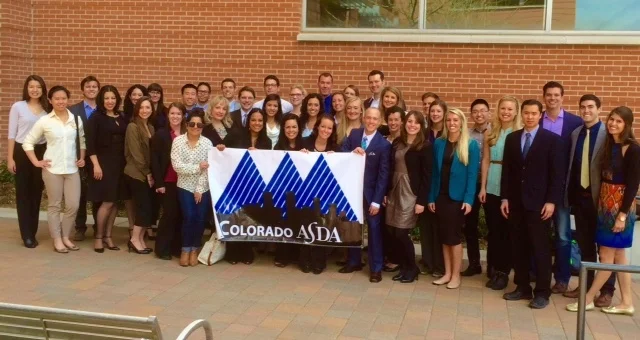
Recap: Colorado ASDA Leadership Workshop

Attachment-1 Being a great leader is something that each of us strives for.  We all have a little bit of leader in us somewhere... we've always been driven for success, and we all hope to be our own bosses someday.  We're all pretty responsible -- I mean, we had to be to get into dental school, right? -- but I think I'd be speaking for many of us if I said that the idea of being a great leader is pretty darn intimidating.
 

This weekend, Colorado ASDA had the honor of hosting Dr. David Rice, founder of IgniteDDS, at our first annual Leadership Workshop.  Dr. Rice has been an immensely popular speaker at past ASDA events, such as regional meetings and the Annual Session, and we were fortunate enough to have him speak to us here, on our very own campus!


IgniteDDS is an organization that works to get people really fired up about dentistry, whether they're patients, students, or dental professionals.  As this workshop was tailored toward dental students and pre-dents, Dr. Rice focused on teaching us to be successful, and how we can really jump-start our careers in dentistry.  Prior to the event, each of us took a DiSC behavioral assessment, the results of which we discussed during the workshop.  Essentially, the DiSC assessment categorizes people into one of four different personality types: Domint, Influential, Steady, and Conscientious.  The theory behind the DiSC is that each of us has one of these personalities, which majorly affects our relationships and interactions with other people.  Dr. Rice described each of these personalities and how they relate to professionalism in dentistry.  In order to be successful in your business, you must build a solid rapport with many different types of people.  In order to do so, you must first know how to work with a range of personalities, and get each type of person to trust and feel comfortable with you.  Staffing a variety of personality types is a great way to maximize the likelihood that your patients will feel at ease being treated in your dental office.  Dr. Rice mentioned many times that treating others as you wish to be treated may have worked in elementary school, but treating others as they wish to be treated is what will get you far in the professional world.  Each patient brings their unique personality into your practice, and with that comes a challenge. Being able to read your patients and work with them on a level in which they feel understood and appreciated will get you far in your practice.


If you are interested in learning more about IgniteDDS or Dr. David Rice, please check out their website, and "like" them on Facebook.  If you'd like to know the specifics of the DiSC personalities, and are interested in finding out where you lie on the spectrum, click here.


Perspective from a Pre-dental Student
MentorshipNLC2.jpg

The mentorship program at the National Leadership Conference. No matter how much outside research I read about ASDA’s National Leadership Conference (NLC), I still had my doubts. Will this conference help me as a pre-dental student? Will I walk away from it feeling more energized about dentistry? I read that there were personal development opportunities available (but then again, that’s what my Bridezilla sister told me about being her Maid of Honor!)

I didn’t exactly know what to expect at NLC, but I had a general idea. I expected the conference to be full of informative breakout sessions and like-minded people passionate about dentistry. However, I didn’t expect to meet people who were sincerely interested in my journey to dental school. I didn't expect to be on the edge of my seat during the presentations and to develop a drive to be more engaged in ASDA. NLC went beyond the scope of my expectations and truly provided many unique opportunities for pre-dental students.  Here are three unique opportunities NLC can offer for pre-dental students:

1) Connect you with a mentor. There are no dentists in my family and few dentists in my life, so it’s hard to find someone who understands the journey to dental school. That’s one reason why the NLC mentorship program can be so valuable. Pre-dental students had the opportunity to be paired with a dental student from schools you want to apply to. It was extremely reassuring to share my challenges and triumphs with someone with prior experience. My mentors allowed me to pick their brains about their schools, gave me great advice on applying, and connected me with other leaders. Yet, I quickly learned that I didn’t have to go through the mentorship program to connect with leaders at the conference. The ASDA leaders, alumni and dental students were all very encouraging and had unique insights into the breadth of dentistry. Connecting with dental students is a great opportunity for pre-dental students to access a supportive community and to be involved in a strong network.

2) Prepare you to become a well-rounded professional. I was truly impressed by the variety of topics and lessons among the four education tracks offered at NLC. In the Business and Financial Leadership track, I learned how to build my personal brand. This skill is not only important for business professionals, but also for pre-dental students. We should be able to communicate what makes us unique from other applicants. In addition, the pre-dental workshop was one of the best comprehensive resources I have ever seen. The workshop highlighted how to enhance your application and how to be innovative in order to stand out. The wide collection of topics and workshops provide a unique training opportunity for pre-dental students and prepare you to become an outstanding applicant and health professional.

3) Engage you in issues related to dentistry. Sometimes as pre-dental students, we can become overly consumed with the details of applying to dental school. With the stress of submitting the perfect application, it’s hard to look past dental school and easy to forget current issues that dentists face. Dr. Shenkin’s presentation on how dentistry's hot topics impact your future quickly energized me and kept me on the edge of my seat. As aspiring dentists, we need to be aware of the dental landscape we will eventually work in. The presentation shed light into the growing number highly indebted dental students but a decline in adult utilization of dental services. Another challenge dentists are confronting is the increase in adult Medicaid dental benefits but stagnant government funding.

The advocacy breakout sessions at NLC allowed me to go beyond dental school basics and dive into policy issues regarding our future profession. As pre-dental students, we can be engaged in organized dentistry now and being an ASDA member is a great way to start. I never truly understood the magnitude of my ASDA membership and the unique opportunities it offers for pre-dental students until attending the National Leadership Conference. Though I walked into the conference with worries and doubts, I left feeling confident in my future career and in myself. I encourage other pre-dental students to join ASDA and to take your involvement further by attending national events.

~Lynn Doan, Pre-Dental ASDA Member

Curriculum Vitae: Your Course of Life

10689682_565294526947336_6438612817494418929_n (1)

As some of you know, I’m one of the older guys here. I have a long history of applying for school positions and jobs. When I attended the ASDA NLC in Chicago, I thought it was important to brush up on my CV writing skills, especially since the CV format may be different than in my native country of Germany. Colleen Greene’s CV writing lecture taught me a few new things. Although there is no exact way to write one, Dr. Greene gave some useful tips and tricks to mastering the CV.

Think about the situation: You apply for a residency, and you know your application will be one of hundreds of others - that your paperwork is in a huge pile of other applications. How will you be the ONE that stands out? Do you think your great GPA alone will get you there? It might, but what happens when your CV looks like a lame pizza flyer… one that you transfer directly out of your mailbox into the trash can without reading?

A good CV should have a structure with clear categories. Why not give the category names a different color? This will give your CV a nice touch, and it will look more interesting than other applications.

The CV begins with your name and address in the header. Include your email address, but be careful. Don’t use your “supertoothdoc” or “cutemolarmouse” Gmail address that you created as a student. You need a “professional” email! If you don’t already have one, create one.

Next, list your EDUCATION clearly. Include the name and location of each school, the dates attended, what you studied, and your grade point average. Leave some space between the information to make things more readable.

The second block should be about your RESEARCH/EXPERIENCE. Tailor this section to the program for which you are applying (residency, associateship, GPR, etc.). List your projects, presentations, and teaching experiences here. Did you receive any awards in your school life? This is the perfect place to write them down.

Do you have any LEADERSHIP or COMMUNITY SERVICE? This information should come next on your CV. Use concrete details about your leadership, specifically your responsibilities...this will make your achievements stand out. If you helped coordinate a service event, include the details.

If you have any existing PUBLICATIONS & PRESENTATIONS, put them in a separate section by journal, title, and year. If you’re submitting your CV electronically consider including links in your publication list, and only write down the important ones. A lengthy list looks like a scrapbook and will expand your CV unnecessarily.

Next, place PROFESSIONAL AFFILIATIONS, such as memberships of ASDA, ADA, etc.  To what extent were you involved with these organizations?

OPTIONAL SECTIONS can be placed now. These may include things like military service, conferences/meetings you have attended, and personal interests. Here is your chance to discuss your hobbies like home brewing, outdoor activities, or painting. Remember that you want your CV to be clean and concise. Introduce these activities in the CV, but expand on them in your interview.   Don’t forget other SKILLS like speaking, reading, or writing fluently in another language. Be honest, and never overstate your abilities. You never know when your interviewer speaks the same language fluently and may test your skills!

Finally, you may give a PERSONAL STATEMENT. I would personally skip this part in a CV and put it on a separate page, but some people like to include it in the CV. This should be a short statement that clearly states your career or school goals. Use action verbs and power words. Make this an interesting reflection of yourself. You want the reader to recognize that you stand out among the other candidates.

If you use some of these little hints in your next CV, you may be the ONE in the huge pile of applications! Most importantly, treat your CV with great care. You have accomplished many things in your life, so shine! Also, please proofread carefully for misspelled words and incorrect grammar.

You can find more information on www.ASDAnet.org/cv, or simply send me an email. I am more than happy to help you with additional resources on how to write an effective CV.

~Michael Nery Schulte, ISP 2015, Colorado ASDA ISP Representative

ASDA and Advocacy—Highlights From ASDA's National Leadership Conference
Becky-Lauren-Natalie.png

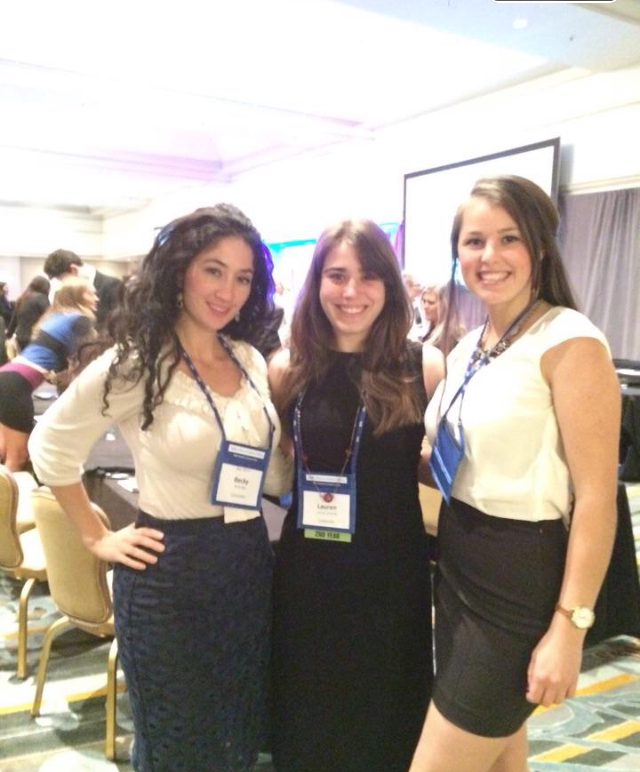
Becky Lauren Natalie This past October, I attended the ASDA National Leadership Conference.  Having recently been elected the ASDA Alternate Delegate for my class, I was sincerely excited and curious about this conference.  I knew I would be surrounded by others who shared my same enthusiasm about ASDA and my commitment to enhancing our dental school experience and future profession. Given my legal background, I am particularly interested in ASDA’s and the ADA’s role in legislative and legal issues regarding dental school education and the dental profession.  While I thought I had a good grasp of the issues regarding the profession, at the conference, I learned so much more about the various nuances within the law that affect dentists. I was thoroughly impressed by the commitment of ASDA and ADA to advocate on our behalf. For this blog post, I wanted to highlight three areas regarding the law and dentistry that were large topics of discussion at the conference.

1)  Pending U.S. Supreme Court Case about Dental Boards and Anti-Trust

Recently, the United States heard oral arguments for North Carolina Board of Dental Examiners v. Federal Trade Commission.  This case hinges upon whether the NC Board of Dental Examiners has the authority to send warning letters to non-dentists who offer dental services, such as teeth whitening.  For this case, the FTC is concerned that the Board is engaging in antitrust behavior.  The pivotal issue in this case is whether the Board of Dental Examiners is considered “private", as anti-trust laws only apply to private entities. While the NC Board of Dental Examiners is considered a public entity, the FTC argues that it is comprised of dentists who primarily make their living as private dentists, and thus, they are also affected by the market that they are attempting to regulate. The ADA submitted an Amicus Curiae brief to the Supreme Court for this case.  An Amicus Curiae brief is essentially an opinion of a third party that is not directly involved in the case but has a substantial interest in the outcome.  The final decision should be issued sometime in 2015. You can view the ADA’s brief here.

2)  Student Loans

The accumulation of significant student loans is a large source of stress for dental students.  While the rising costs of tuition are often unavoidable, ASDA and the ADA are advocating for students and recent graduates from a tax standpoint.  Currently, most dentists’ incomes are too high to have a student loan interest deduction on their taxes.  The ADA is actively lobbying the federal legislature to completely eliminate this income cap.  This way, interest on federal student loans can be considered a tax deduction, which can potentially save dentists up to thousands of dollars each year. To take action on Student Loans through ASDA's Action Site, Engage, CLICK HERE.

3)  Dental Mid-Level Providers

Unlike Colorado, other states in the country are allowing “mid-level” providers to provide some basic, yet irreversible dental procedures in order to increase access to dental care.  ASDA and the ADA are very concerned about this, as it allows individuals with less than four years of dental training to perform procedures that can permanently affect a patient’s tooth.  Additionally, the addition of mid-level providers dilutes the dental profession in these states, which can have a substantial impact on the quality of dental services and the salaries for dentists. ASDA seeks to ensure that only dentists provide irreversible dental procedures to patients.

These three issues are just some highlights of the myriad of issues and work that ASDA and the ADA do on our behalf.  In addition to attending the legislative sessions, I attended marketing, financial, and other sessions which my colleagues have already highlighted. This conference confirmed to me that ASDA is really looking out for us. I certainly caught the “ASDA fever”!

Marketing at the National Leadership Conference

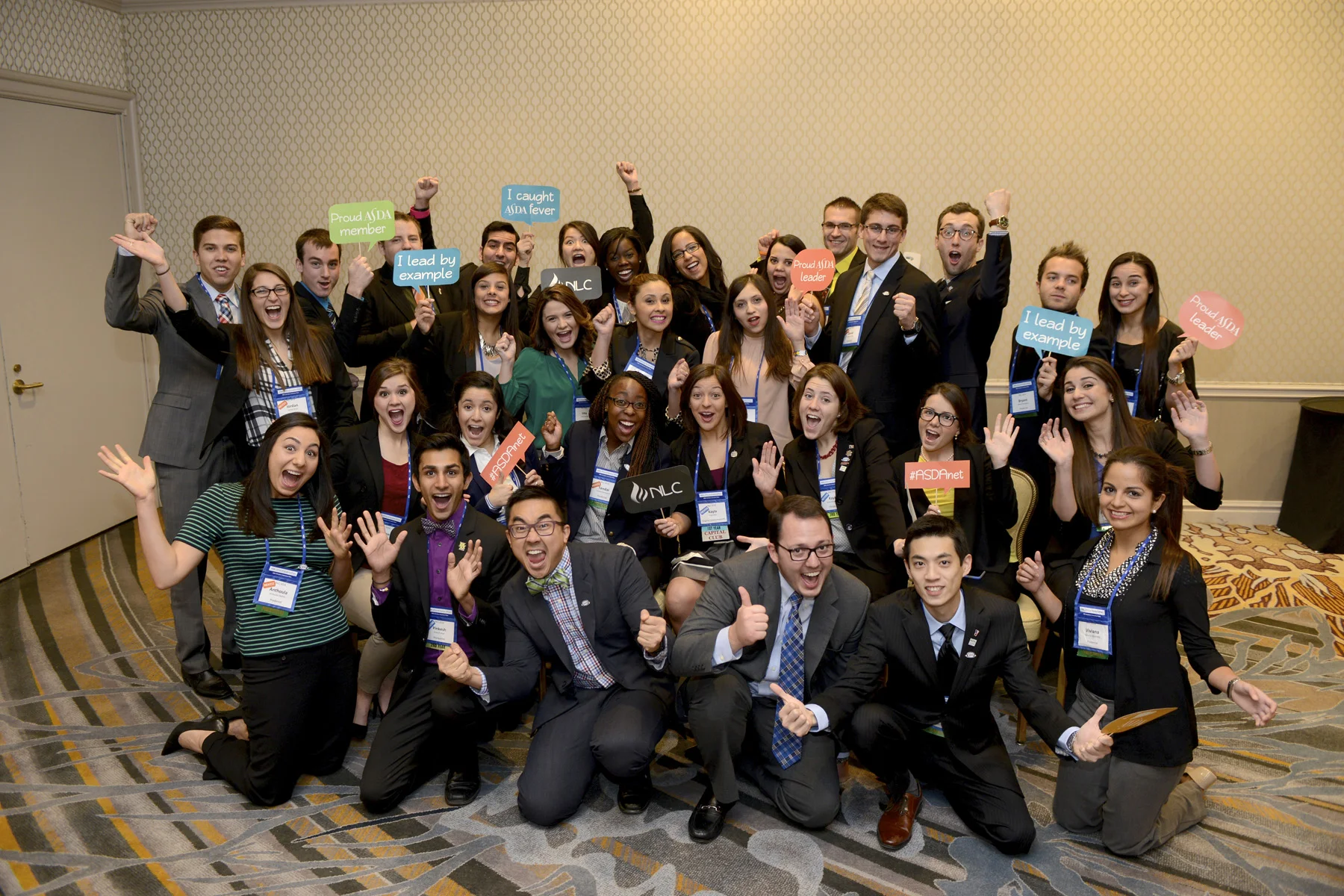
NLC Group Attending ASDA's National Leadership Conference for the second time, I knew what to expect - a great learning experience, a chance to make new friendships & connections, and most importantly, renewing my excitement about dentistry. In dental school, we're often thrown into books and typodont work, making it challenging to see the future as a dentist. The speakers at the conference presented many topics that allowed us to connect the dots between our studies and the seemingly far away future. One topic, presented by Dr. Mike Meru, was marketing a dental practice successfully on a budget. Learning the details of marketing kept me excited about how dentistry functions in a dynamic environment, yet taught me that additional effort is required in order to stand out.


According to Dr. Meru, in order to begin marketing you must create a brand - the symbol, title, or image that will embody your work.  He also claimed that you can start working on your brand TODAY!  The key is creating a logo that is recognizable and distinct, which can be both easy and inexpensive. If choosing this route, however, it is important to note that you get what you pay for – that the quality of a service is often correlated with the amount of money paid for it. In essence, shop around – and keep in mind that many companies such as 99 designs, crowdSPRING, DesignCrowd, and logomyway.com offer a superior product at a conservative price that can compete with the quality of expensive graphic designers.


Now, armed with a great brand and logo, you can move on and present your practice to the public. According to Dr. Meru, when starting a new practice it is worth investing in search engine optimization, so that your business appears on different searches, becoming visible to the masses. From there, begin advertising in local publications, at community gathering sites, and on social media to see how your business grows. However, be sure to keep in mind that social trends are constantly evolving (i.e. Facebook vs. Instagram), and use this to your advantage – these resources are typically free and a great way to spread awareness of your practice. Using hashtags, QR codes, and giving away merchandise are other ways of advertising on a budget.


All of this thinking about adverting got me in the mindset of private practice, and how close I actually am to becoming a dentist. Since returning from my trip, I’ve been able to put more energy into my lab work and focus on my books, as my interest in dentistry has been reignited. I know that in just two years I will be combining my work with my interaction in the community – and I can do all of this through the benefits of marketing.


~Natalie Lesinski, Class of 2017, Colorado ASDA 2nd Legislative Liaison  
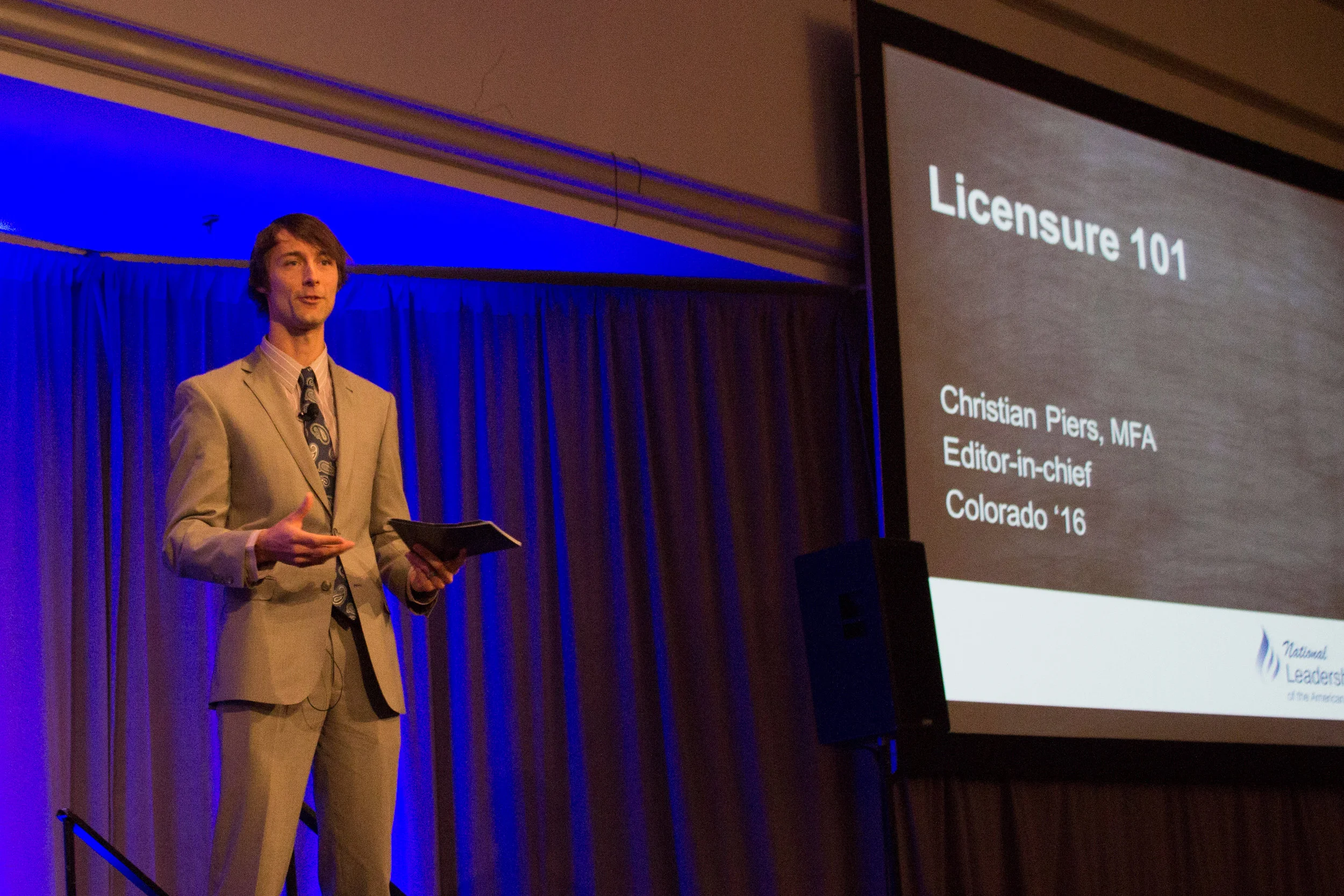
An Intro to Licensure Reform
licensure101.jpg

licensure101  

If you want to practice dentistry, you need to have a license. And if you want to have a license, you should read this post.


You need to complete three requirements (educational, written, and clinical) to get a dental license. You can fulfill the educational component by graduating from a dental school accredited by CODA (the Commission on Dental Accreditation), and complete the written requirement by passing NBDE Parts I and II as administered by JCNDE (the Joint Commission on National Dental Examinations). The clinical component is where things get tricky.


There are five regional testing agencies that administer these clinical exams:


Council of Interstate Testing Agencies (CITA)

Central Regional Dental Testing Services (CRDTS)

North East Regional Board of Dental Examiners (NERB)

Southern Regional Testing Agency (SRTA)

Western Regional Examining Board (WREB)


Each of these agencies gives a separate, subtly different examination, and those exams are all accepted by different sets of states. In other words, no one exam is accepted by all 50 states. So you need to figure out where you want to practice. Once you’ve done that (no big deal), go to the ADA list of state dental boards and click on the relevant state dental board’s website. There you can figure out which clinical licensure exams are accepted by your dream state.


But is this the way it has to be?   ASDA doesn’t think so. The association’s formal position on licensure is outlined in ASDA’s L1 policy, which you can read at http://asdanet.org/licensure/.   (If you’d prefer a more audiovisual experience, check out this video of Colleen Greene, 2012-13 national ASDA president.)


Here’s the big highlight: ASDA doesn’t support the use of live patients in clinical licensure exams.   Instead, the second half of its L1 policy presents these alternatives:


  • “Initial licensure without an independent clinical licensing examination. Graduates of a U.S. CODA-accredited dental school should be eligible for initial licensure without taking any additional clinical examination.
  • A portfolio-type clinical examination based on cases compiled during the final year of dental school. Such an examination should require a standardized catalog of required clinical procedures and the portfolio should be evaluated by an examiner independent of the dental school. (Currently under development in California.)
  • A non-traditional patient based clinical licensure examination. Although ASDA does not support the use of live patients in traditional clinical licensing examinations, the association recognizes the potential for creation of an ethical, patient-based examination.
  • An Objective Structured Clinical Examination designed to evaluate a candidate’s diagnostic and treatment planning skills. (Currently accepted in Minnesota.)
  • Completion of a one-year postgraduate residency program. Completion of a U.S. CODA-accredited postgraduate program that has a minimum duration of one year should be sufficient to substitute for the clinical licensure examination requirement in any jurisdiction.” (Currently mandated in New York; accepted in Washington, Minnesota, California and Connecticut.)


This desire for alternatives springs from concerns about the ethics and accuracy of the current exams. To outline those facts, ASDA is drafting a licensure “white paper,” which is a document intended to help readers understand an issue, solve a problem, or make a decision. It’s also working to eliminate live-patient licensure examinations at the state level through work with state dental associations, state dental boards, state legislators, and national dental organizations.


The American Dental Education Association (ADEA) has also formed a task force to report back to its 2015 House of Delegates with recommendations about how to help dental schools transition from patient-based clinical examinations to an Objective Structured Clinical Examination (OSCE). We’re excited to hear those recommendations in March 2015.


In the meantime, the licensure reform process is moving forward, and the state-by-state requirements for licensure continue to evolve-- so make sure to check back with your state dental board's website as your exam date approaches!  Does all that make sense?  Don't worry if it doesn't!  It’s easy to get lost in the forest of jargon and acronyms surrounding licensure, so make sure to post your questions in the comments section below!


~Christian Piers, Class of 2016, Colorado ASDA President

#CoASDAis

#CoASDAis

The first time I heard about ASDA, I didn’t even realize I was hearing about ASDA. All I knew was that I wanted scrubs with the CU School of Dental Medicine logo on it. Since then, however, ASDA has completely changed my dental school experience for the better.

When ASDA was first introduced to our class, a lot of effort went into explaining what it was, and yet, I still found myself struggling to understand it. When I would ask different members about ASDA, they would all give me different answers. Finally, after about a year, I realize that the reason I was having trouble understanding ASDA is because ASDA is everything. It is so all-encompassing that sometimes it can be hard to explain. It wasn’t that nobody knew what ASDA was, it was just that ASDA was something different to everyone.

Simply put, ASDA is the American Student Dental Association which is the nation's largest student run association whose mission centers around protecting and advancing the rights, interests and welfare of dental students. But what does that mean exactly, and more specifically, what does that mean to you?

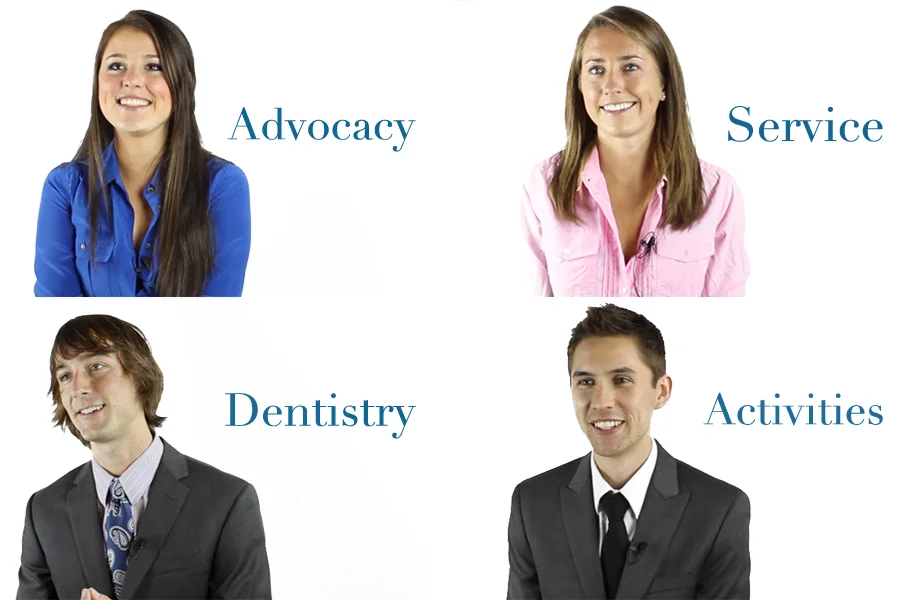
Well, to better explain ASDA and make its mission, purpose and benefits more clear to those who are less familiar with it, we have decided to literally spell it out for everyone. The letters "ASDA" stand for the American Student Dental Association. But to us, ASDA also stands for the four pillars of Colorado ASDA: Advocacy, Service, Dentistry and Activities. We have decided to focus on these four categories because everything within ASDA can fit into them (and it also conveniently spells out ASDA). We have tried to restructure the chapter's resources to follow this theme. You may notice that even our blog categories are set up to reflect this new focus, as will our website once we get that fully up and running. Of course ASDA is more than just this, but these four words are where everything starts.

Advocacy. Advocacy is what makes ASDA unique from any of the other dental student organizations out there. Locally, we work with the Metro Denver Dental Society and the Colorado Dental Association to educate our state representatives on current issues facing our profession and topics affecting us as students. Nationally, we represent about 92% of all dental students, so people listen to us when we vote in a new policy and take us seriously as an organization.

Service. Service is why most of us sought a career in dentistry in the first place. Our chapter is always organizing service and community outreach activities. From helping out at COMOM to volunteering at the Fifth Gear Kids events, there is always something that you can get involved in to help out the community around us.

Dentistry. I have had numerous people from my class ask me what ASDA is. Before now, the only way that I could really explain it is "everything dentistry outside of dental school." Even though that answer isn't as complete of an answer as I would have liked to give, it still is true. ASDA is where you learn everything about dentistry that you don't learn in dental school. ASDA teaches you to be a leader in your practice and in your community. ASDA shows you how to manage your finances while you are in dental school and ways to manage your business when you graduate. ASDA helps you to prepare for things that you might not even realize that you want to know yet, like integrating new technology into your practice without overdoing it and what things to look for when searching for an associate position.

Activities. The activities that Colorado ASDA puts on are awesome. If you participated in Thrush Week and the Amalgames (see our Facebook Page for pictures), then you know what I'm talking about. If you didn't, then it's not too late. We still have plenty of things coming up in the near future (be on the lookout for "Shimstock," our music and talent competition coming in October).

I got involved in ASDA without even fully understanding what it was because I could see potential-- not only in the chapter, but in myself through the chapter. ASDA was the only student organization, in my mind, that had everything... and best of all, it was free!

Since deciding to get involved, I have had some of the most amazing opportunities of my life. ASDA motivates me to step just far enough outside my comfort zone that I do things I have never done before, but not far enough that I regret my participation. It pushes me to meet people, helps me find mentors and gives me the resources that I need to succeed (and not just on boards).

ASDA is a lot of things to a lot of people and our chapter here at Colorado is expanding to become more than it has ever been before. To me, Colorado ASDA is opportunity. It is fun. It is my creative outlet. It is networking. It is the best experience I have had in dental school and it has become a big part of my life. I believe in everything that this organization stands for and choosing to become involved has been one of the best decision I have ever made. I can’t imagine dental school without ASDA, nor would I ever want to. ASDA is about getting involved and having a voice-- so get involved and say something. You might just be surprised at what can happen because of it.

http://www.youtube.com/watch?v=RY31ouvXfLU

Tell us what #CoASDAis to you in the comments below or use the tag #CoASDAis to tell us on Facebook, Instagram or Twitter by Aug 29th for your chance to win a $10 Target Gift Card!

~Kyle Luis Larsen, Class of 2017, Colorado ASDA President-Elect